
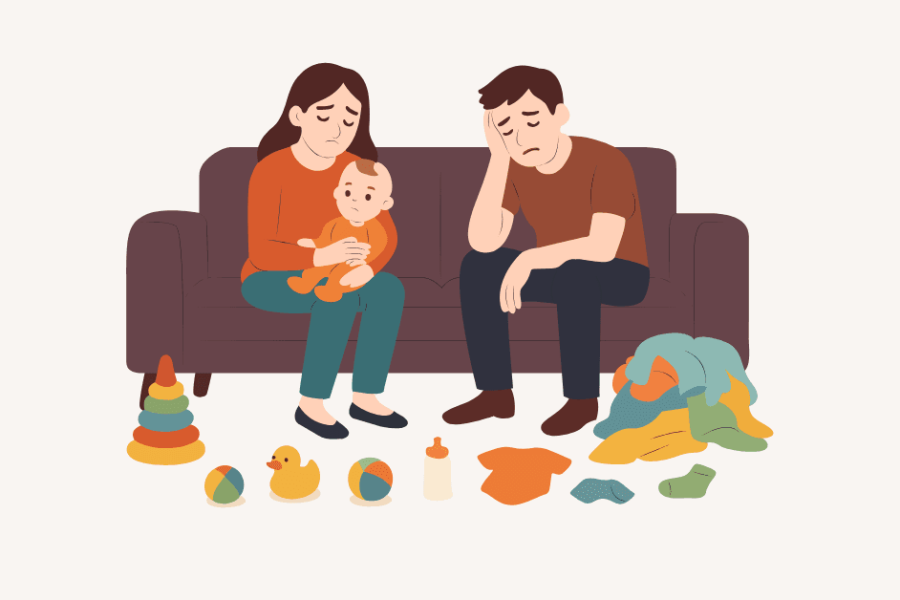
I can relate. Sleep deprivation is incredibly challenging, and it often leads us to question everything around us, particularly our relationships. It’s amazing how something we once took for granted can suddenly become the driving force behind our emotions.
After a night filled with interruptions from a crying baby (whether they need milk, comfort, or something else), you somehow make it through until morning. Yet as the day begins, you find yourself just trying to survive. The clock ticks on, but your mind feels foggy and disconnected. It’s as if you’ve been lobotomised. Even the smallest annoyances start to get under your skin—waiting in line for coffee feels unbearable when the person in front of you takes too long, or sitting in a restaurant can become frustrating when your meal arrives ten minutes late, making you question why you even came in the first place.
Thoughts swirl in your mind: Is the universe playing tricks on me? Is this what motherhood really means? Am I supposed to feel this way? It can be an excruciating experience. With so little sleep, responding to frustrating situations rationally becomes nearly impossible.
What Does the Research Say?
A 2006 study by the University of Arizona found that individuals who experienced sleep deprivation over a 55-hour period exhibited:
- A greater tendency to blame others for issues
- Decreased willingness to take responsibility in conflict situations
- Heightened aggression
- Reduced likelihood of engaging in behaviours that promote effective social interaction
In a journal that studied ‘the long-term effects of pregnancy and childbirth on sleep satisfaction and duration of first-time and experienced mothers and fathers‘ it suggests that parents now face up to 6 years of sleep deprivation. This study did an almost equal test between women and men; 2541 women and 2118 men and found that women lost over an hour of sleep compared to before they got pregnant whereas men only lose 13 minutes. As one can imagine, this is physically and emotionally draining for mums.
Let’s Imagine a Scenario
Let’s picture this: you and your partner are new parents to a lovely little baby. You feel incredibly blessed, grateful, and happy about this new addition to your family. But then, boom reality sets in. Caring for a newborn is a huge responsibility, and it requires you to be completely devoted to their needs. You find yourself making countless decisions every day, which can be exhausting!
For every choice you make, you and your partner must reach an agreement on the best approach. As first-time parents especially, you might find yourselves asking questions like:
- Is this the right time to put him to bed?
- What should we do if she starts crying?
- Should the mother breastfeed? What will others think if she doesn’t?
And the list goes on. These are all issues that require agreement and may need to be reassessed when things don’t go as planned. Let’s be honest, babies are unpredictable, so you’ll find yourselves revisiting decisions time and time again. There are countless choices to consider in those first few weeks alone, and each one opens the door for potential disagreements.

The Parental Disagreement
You and your partner may have once developed a solid method for resolving issues and had already agreed on many of these questions before becoming parents. However, as any parent knows, all those decisions come into question the moment things start to go off rails.
Unexpected challenges arise, such as the baby developing reflux, having a milk allergy, and not sleeping well. Your partner may begin to pressure you, emphasising the importance of breast milk and suggesting that you change your diet for the baby. It can all feel overwhelming. With the baby’s poor sleep, it may start to feel like responsibilities are shifting, and you’re just trying to get by. Frustration builds as nothing seems to be going smoothly, and to make matters worse, your ability to communicate with each other in a calm and civil manner becomes strained.
Two people who once saw eye to eye are now forced to debate some of the most important decisions they’ll ever make, and they may find themselves psychologically inclined to blame the other, becoming angry and less willing to play fair or accept responsibility. It can turn into a battlefield.
Add in Lack of Sleep
This is simply the reality of having a child, and that’s without factoring in sleep deprivation. Now, add poor sleep into the equation, and it can quickly turn into a nightmare, right?
When people are sleep-deprived, they often express less gratitude towards one another and, more importantly, they start to feel undervalued. Additionally, this lack of sleep takes a toll on your sexual relationship. On average, this pressure can prevent couples from being intimate for several months to a year. Many of my clients find themselves either sleeping in their children’s rooms or having their children share a room with them, which undeniably places a significant strain on intimacy. When parents do manage to find a moment alone, it’s common for the mother to feel exhausted and say no.
The ‘mum rage’
For mothers, especially, welcoming a baby can feel like a loss of their own identity. What once seemed endearing about a friend’s child or a scene from a TV show can now become incredibly frustrating. Sleep deprivation can push you to the brink, causing you to react in ways you normally wouldn’t, like snapping or shouting. While motherhood is undoubtedly magical, it also brings a storm of challenges and emotions. Feelings of frustration and anger are not uncommon, particularly within your household. When a mother is deprived of a full night’s sleep, coupled with hormonal changes, a lack of support, loneliness, work-related stress, and more, it can feel as though rage is just around the corner and that can only impact your relationships.
This is especially evident when a mother sees her partner return home from work, play with the kids for a few minutes, and then relax while she continues the bedtime routine, cleans up the mess, and wakes up repeatedly throughout the night. It builds resentment
In Conclusion
In conclusion, while sleep deprivation may not end your relationship, it can certainly take a toll on it. It won’t benefit your partnership either. I’ve experienced it firsthand – the endless arguments, the short tempers, the resentment, and the feeling of being unheard.
Enduring prolonged tiredness is incredibly challenging, but through my journey as a sleep consultant, I’ve learned that I don’t have to sacrifice my well-being for anyone. In fact, it’s healthier for my child to get quality sleep to start with – their body is growing and repairing during sleep. Once I realised this, it became clear that teaching my child the skills to sleep well was essential—not only for them, but for reclaiming my own life.
It’s amusing to reflect on how, after I began getting full nights of rest again, I often wonder why I allowed the situation to persist for so long. While it’s true that mothers are strong, they don’t have to be. What’s most important is being healthy and happy. Addressing sleep debt can significantly enhance your life and strengthen your relationships.
Teach your little one sleep skills!